
Kevin Nuckolls

Carbon-based nanomaterials have been the focus of a myriad of research endeavors within the field of Condensed Matter and Materials Physics for the past few decades. Certain allotropes of carbon, such as single-layer graphene, single-walled carbon nanotubes (SWNTs), and spherical carbon fullerene, have been thoroughly explored in their electrical, thermal, and mechanical properties. These forms of carbon have exhibited extremely interesting physical properties, such as high carrier mobility, high tensile and elastic strength, and superconductivity. However, as recently as 2010, a new form of carbon has been discovered known as […]
Patrick Forrester

In the past ten years, scientific interest has grown in the field of two dimensional self-assembled molecular structures because of their promise for flexible nanoscale electronic applications including single molecule sensing, improved photovoltaics, and organic light-emitting diodes. Covalent Organic Frameworks (COFs) are strong candidates for these applications by virtue of their mechanical and thermal stability, transparency to visible light, and ease of large scale production, which could potentially revolutionize electronics and alternative energy. Currently, two-dimensional COF synthesis is not well understood and relies heavily on trial and error, and there […]
Susan Wang
Many factors come into play in the course of an organisms growth and development, one of which is the transcriptional coregulator C-terminal Binding Protein (CtBP). CtBP has been characterized in a variety of developmental pathways, including the TGF-beta and WNT pathways, and has been shown to produce growth abnormalities when studied in drosophila melanogaster. I plan to study transcription of drosophila CtBP by using fluorescent in situ hybridization (FISH). Although drosophila CtBP is encoded by just one gene, there are actually several isoforms of the protein that can each produce […]
James Zheng
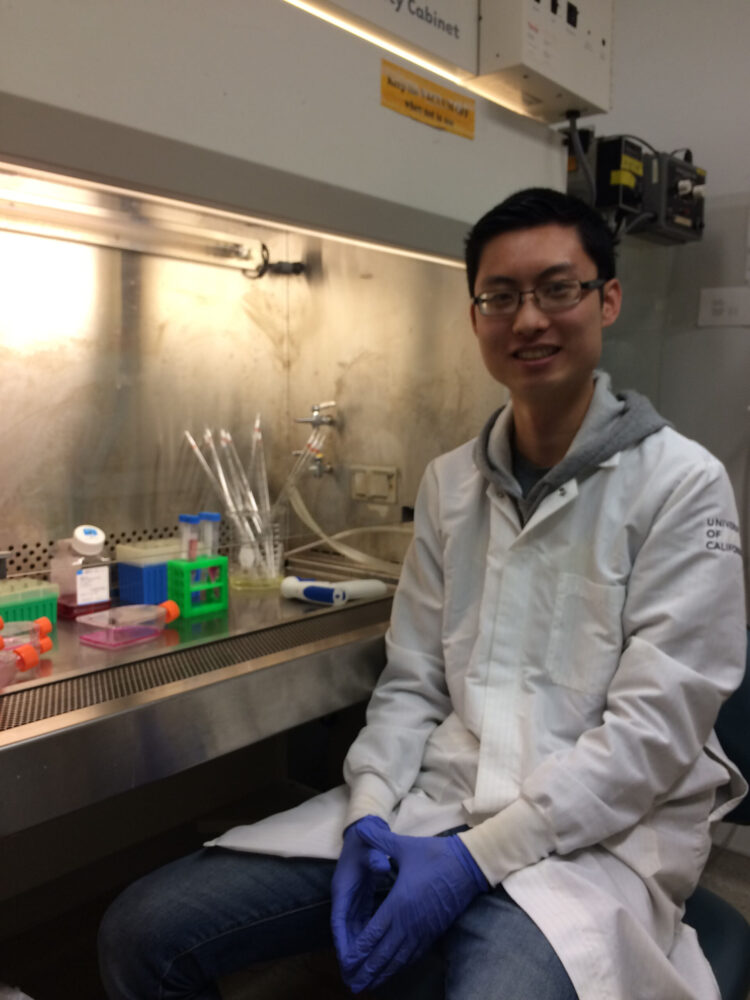
Melanoma is among the most common and lethal forms of cancer and its incidence has greatly increased in the last 30 years. Long non-coding RNAs (lncRNA) are a class of epigenetic regulatory molecules important to cancer development and progression, and can serve as tumor markers or even targets for therapy. My research is focused on two novel lncRNA important for the survival of NRAS mutant malignant melanoma. I aim to verify the effects of these lncRNA, as well as demonstrate that we can inhibit melanoma cell growth both in vitro […]
Stella Chen
Prosocial behavior is rooted in empathy, or the ability to understand and share the feelings of others. Humans, like many other animals, have been shown to process the pain of in-group and out-group members differently, reflecting strong empathic bias towards ones own group. Encouragingly, research suggests that positive social interactions with an outgroup member leads to increased empathy for the out-group. Previous research with rats in a helping behavior test has demonstrated that rats will perform prosocial behaviors, such as releasing conspecifics trapped inside a restrainer, and will do so […]
Beth Connors

One of the most interesting components of the global carbon cycle is the movement of carbon from the atmosphere to the deep ocean, where it is deposited as particulates, a process called the Biological Carbon Pump (BCP). The BCP combines physical oceanography and biology, as the majority of the carbon dioxide that is pulled from the atmosphere into our oceans for biological processes in the photic zone, and then moves from the surface to the deep ocean as zooplankton excrement. Using robotic devices to monitor this chemical and biological cycle, […]
Kimberlie Le

My research is an interdisciplinary study of the effects of agrochemicals on river ecosystems. I will be travelling the Taichung, Taiwan to conduct my study in an area which predominately farms various fruits and vegetables. I’m interested in looking at the environmental effects of the agriculture on river ecosystems by performing bioassement arrays and looking at macroinvertebrate concentration as well as water sample analysis for pesticides. To piece together my project, I will also be tracing a history of farming practices in Taiwan too see how they have changed due […]
Sarah Alsamman
Pseudomonas aeruginosa is an opportunistic pathogen that most commonly causes infection in immunocompromised individuals or compromised epithelial surfaces such as the cornea. This infectious agent is the leading cause of contact lens-associated microbial keratitis, which sometimes results in vision loss or blindness. I am interested in the mechanisms through which P. aeruginosa causes infection. P. aeruginosa is considered an extracellular pathogen known to utilize a type-III secretion system, a needle-like macromolecular structure implemented by the bacteria to inject toxins into the cytoplasm of a target cell without ever entering the […]
Faustine Luo
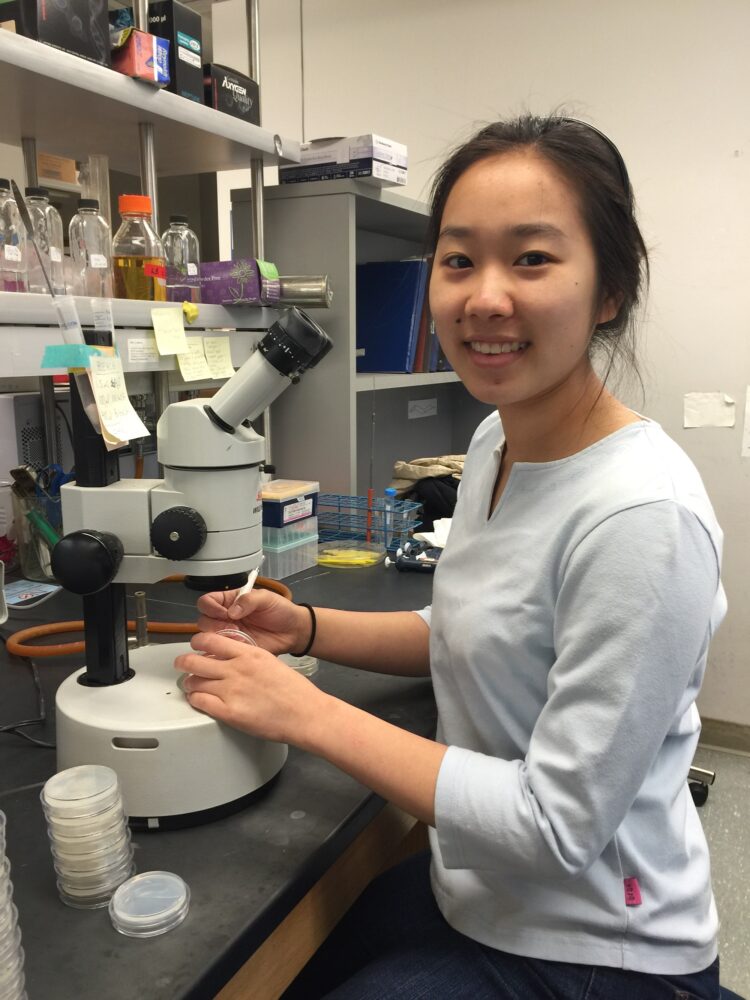
The Wnt signaling pathway is an evolutionarily conserved signal transduction pathway that regulates important developmental processes such as cell fate, cell migration, cell polarity, and cell proliferation when activated by secreted Wnt glycoproteins. Mutations in Wnt signaling or Wnt genes have been shown to lead to specific developmental defects, including many human diseases such as cancer. Using C. elegans as a model organism, we strive to more deeply understand how Wnt signaling shapes development in more complex organisms. My research project focuses on the Wnt pathway that establishes the polarity […]
Avery Kim

The large scale matter distribution allows to answer the fundamental questions about the Universe including the cosmological constituents and the origin of the Universe. The Universe seems homogeneous on a very large scale (~100 kpc), yet on the smaller scales such as on the order of clusters and galaxies, the cosmological structures exhibits non-Gaussianity. This non-Gaussian matter field created by non-linear gravitational evolution is proved to be hard for modeling. Since the majority of matter is almost non-interactive dark matter, the science we learn from a direct observation has a […]