
Meghana Eswarappa

“Dengue is a mosquito-borne viral disease that places about three billion people at risk for infection yearly in tropical and sub-tropical regions worldwide. Infected individuals can be asymptomatic, or they can show clinical disease, including an acute debilitating fever (Dengue Fever) that can progress to life-threatening conditions of severe dengue, including Dengue Shock Syndrome (DSS). The goal of this research is to investigate whether cell-free nucleic acids in patient serum can serve as biomarkers to distinguish between cases of mild and severe dengue disease. I will accomplish this by characterizing […]
Shiaulou Yuan
Cory Gerrity
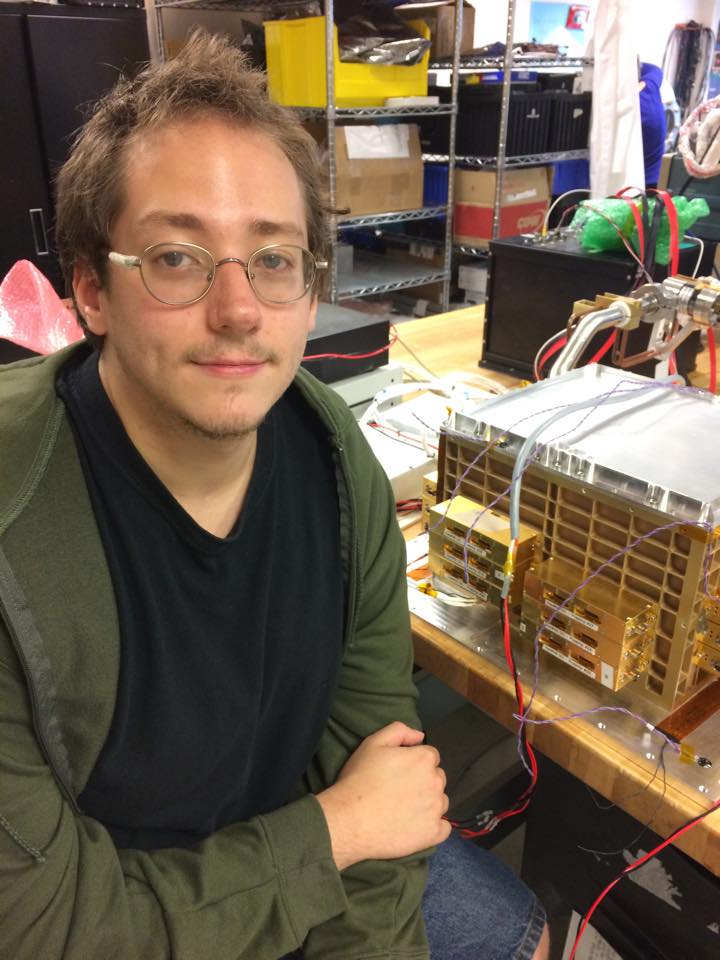
In Compton telescopes with crossstrip germanium detectors, interactions on the detector strip borders where charge is split between strips result in significant signal loss that degrades spectral resolution. Thus, modeling this charge loss mechanism is essential for making corrections and maximizing the resolving power of the instrument. Yet despite this, the mechanism is not entirely understood. My project seeks to model charge collection and transport in the detectors of the Compton Spectrometer and Imager (COSI), a balloonborne gamma ray telescope operated out of the Space Sciences Laboratory. The research hopes […]
Denny Cha
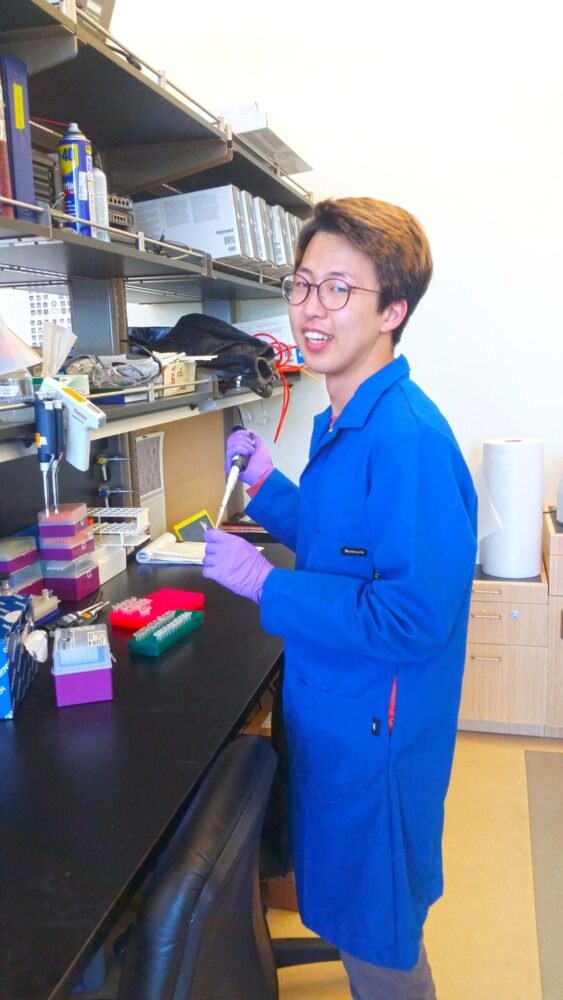
Ubiquitin is a protein that serves as a molecular tag for either degradation of its targets by the 26S proteasomes or for a wide variety of other functions such as DNA repair, transcription, endocytosis, membrane transport, or protein localization in a proteasome independent manner by covalently attaching to its target proteins. Deubiquitinases (DUBs) are proteins that mediate ubiquitin removal and processing to play regulatory roles in multiple cellular processes. The deubiquitinase (DUB) Usp44 is a critical regulator of cell division that acts as a tumor suppressor by preventing premature anaphase […]
Evelyn Yao
Christina Shih

I intend to study how oncogenic stress weakens and kill animals using the model organism Drosophila melanogaster, because currently it is not clear how and why cancer kills animals. It is known that cancer patients suffer with cachexia, the major loss of fat tissue and skeletal muscle mass, which is a significant factor in increased mortality rate in cancer patients. I have already established a working system by expressing an oncogene Ras in the intestinal stem cells of adult flies to induce cancer. In order to manipulate additional genes in […]
Jiahong (Benjamin) Zhang

Epilepsy currently afflicts more than 50 million people worldwide. While anti-epileptic drugs are effective at treating 70% of this population, the rest have to resort to invasive surgeries to alleviate their seizures. The electrical interactions of neurons in the brain are described by a set of stochastic partial differential equations. Seizures can be thought of as electrical waves propagating on the brain. In this project, I intend to manipulate the mathematical model to develop a new noninvasive way to control seizures in conjunction with a concept from physics called localization. […]
Joshua Sperling
James Zheng
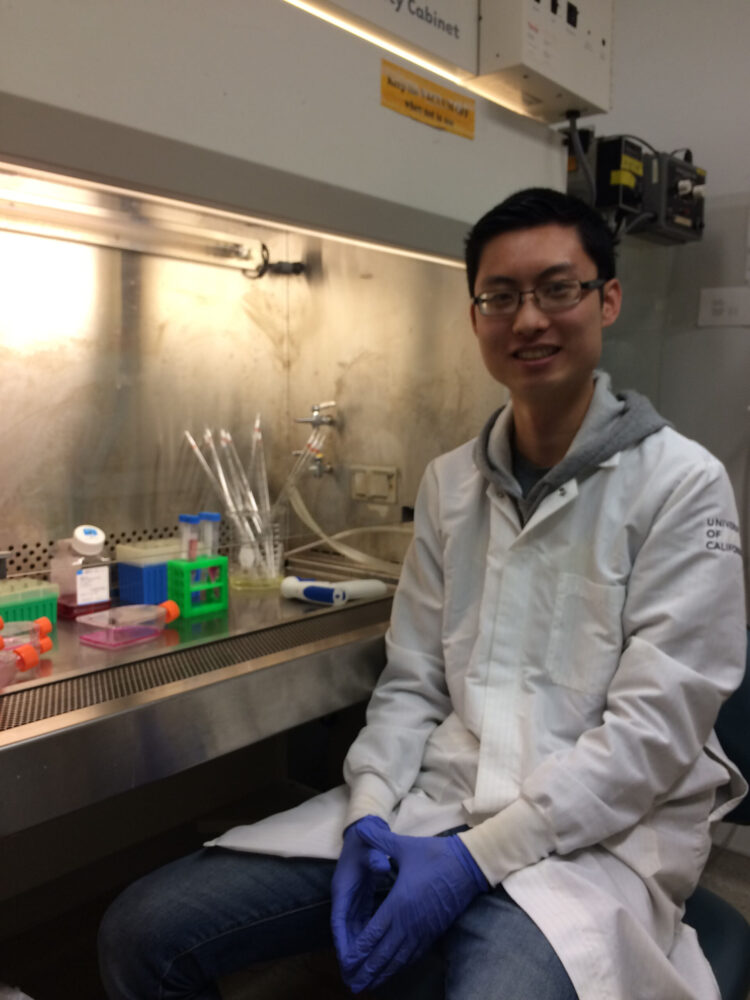
Melanoma is among the most common and lethal forms of cancer and its incidence has greatly increased in the last 30 years. Long non-coding RNAs (lncRNA) are a class of epigenetic regulatory molecules important to cancer development and progression, and can serve as tumor markers or even targets for therapy. My research is focused on two novel lncRNA important for the survival of NRAS mutant malignant melanoma. I aim to verify the effects of these lncRNA, as well as demonstrate that we can inhibit melanoma cell growth both in vitro […]
Susan Wang
Many factors come into play in the course of an organisms growth and development, one of which is the transcriptional coregulator C-terminal Binding Protein (CtBP). CtBP has been characterized in a variety of developmental pathways, including the TGF-beta and WNT pathways, and has been shown to produce growth abnormalities when studied in drosophila melanogaster. I plan to study transcription of drosophila CtBP by using fluorescent in situ hybridization (FISH). Although drosophila CtBP is encoded by just one gene, there are actually several isoforms of the protein that can each produce […]