
Evelyn Li

Language is a crowning achievement of human civilization and a defining characteristic of human intelligence. There are over 5000 languages spoken in the world. Most people speak only a handful of languages, so translation is critical to overcoming barriers in communication. Unfortunately, translation is laborious and challenging, and cannot be done manually at scale. As a result, machine translation (MT) has been an active area of research in artificial intelligence. This research focuses on methods to improve MT. It incorporates the idea of neural machine translation, which builds a neural […]
Greg Pommier

Glaucoma is a leading cause of irreversible vision loss around the world. Primary open angle glaucoma (POAG), the most common form of glaucoma, arises from functional and morphological pathologies in the trabecular meshwork (TM), a band of tissue in the anterior segment of the eye that regulates intraocular pressure (IOP) by controlling outflow of the aqueous humor. In this project, I will construct a novel three-dimensional (3D) bioscaffold structure for TM cell culture that will be used to construct a TM tissue model and mimic in vivo conditions. This bioengineering […]
Jamie Shiah

The endosomal sorting complex required for transport (ESCRT) complexes encompass an evolutionarily conserved, multi-subunit machinery that mediates unique membrane remodeling and scission away from the cytoplasm. This requires stabilization of negative membrane curvature, as induced by the ESCRT complexes. Now, studies have shown that ESCRTs can also direct membrane budding of the opposite topology, akin to that of clathrin-mediated endocytosis by dynamin. Human ESCRT-III subunits, charged multivesicular body protein (CHMP1B) and increased sodium tolerance 1 (IST1), co-polymerize to form spirals coating the outside of membrane tubules to facilitate positive membrane […]
Adrian Overly
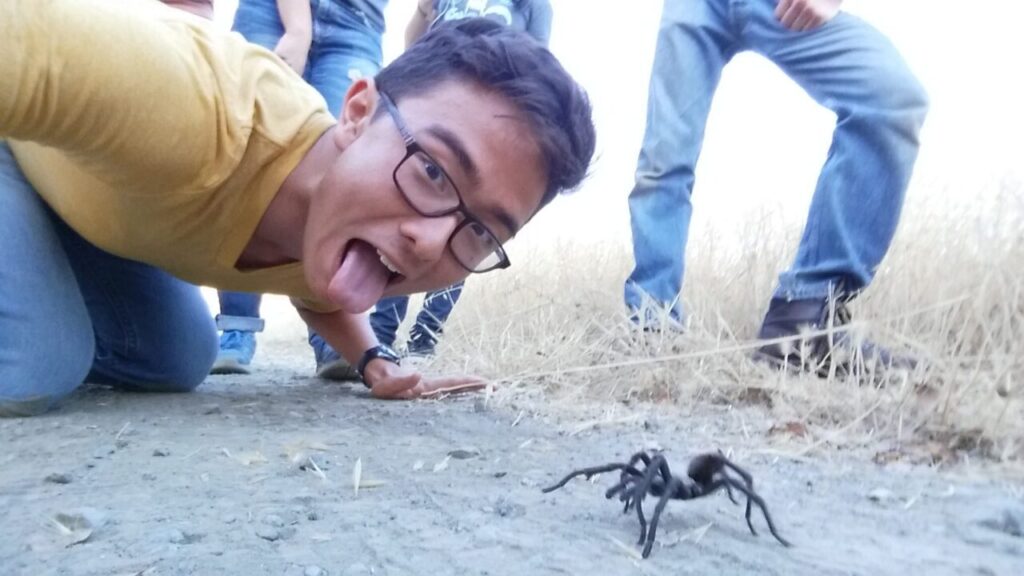
Critical photoperiod, the threshold day length that accelerates or is required for flowering, allows plants to flower in response to seasonal cues that indicate environmental conditions should be favorable for seed development. Twenty-first century climate change, however, has led to changing precipitation and temperature patterns, and because day length will remain constant, the same photoperiod may not necessarily predict the best time of year to flower on a local scale. Species unable to evolve their flowering responses to photoperiod are at high risk for extinction. Understanding the genetic basis of […]
Charlie Reid

In string theory we are interested in the set of world sheets swept out by strings moving through spacetime that satisfy certain equations of motion. This set, called a moduli space, is mysterious and complicated but it possess a lot of structure that is not apparent at first glance. I study this moduli space using a mathematical tool called K-theory which leads to studying an infinite dimensional cone in a space of rational functions. This cone is invariant under certain rotations of the space of rational functions. I study arbitrary […]
Vivek Narayan

Within the last decade, research on the microbiota has begun to shed light on the immense contribution of gut microbes to host health, metabolism, immunity, and reproduction. Even more recently, studies have identified systems in which animals that are exposed to a toxin have acquired gut bacteria that confer resistance to the animal host. I am particularly interested in ammonia, a chemical that is toxic in high concentrations to most animals. All life on earth requires nitrogen, yet the multi-step nitrogen cycle relies primarily on bacteria to carry out steps […]
Ann Deng

In recent years, our view of the lysosome has changed from the cells recycle bin to a sophisticated metabolic signaling center. The lysosome is the site of recruitment and activation of the mammalian Target of Rapamycin Complex 1 (mTORC1), a master regulator of cell growth and metabolism. The surfaces of lysosomes harbor many different chemical sensors that communicate with mTORC1, but how these different stimuli are integrated and translated into mTORC1-regulating signals is still poorly understood. As there has been increasing evidence that the facilitation of protein scaffold formation by […]
Brian Stone

In solid-state physics, the theory of electronic band structures successfully explains many physical properties of solids. Band structures, which describe the range of allowed energies of an electron in a solid, form the foundation of our understanding of solid-state devices, such as transistors and solar cells. I plan to develop, modify, and utilize computational tools that use band structures to analyze the electronic behavior of solids. More specifically, I will be using and modifying open-source materials analysis tools, such as pymatgen (Python Materials Genomics), to calculate and analyze band structures […]
Andy Chen

There is evidence that body motion can either improve (Gallero-Salas et al., 2020, Gilad et al., 2018 ) or inhibit (McBride et al., 2019) performance during head-fixed behavior in mice. Therefore, it is important to understand how body movements affect sensory detection performance in behavioral tasks. My research project will look closely at the effects of body movement on a mouses performance in a whisker-based sensory detection task. From previous literature, we know that body movements modulate sensory signals in cortical areas of mice. My research will involve using behavioral […]
Kendall Fitzgerald

One of the most ambitious expeditions in the history of UC Berkeley has yet to be completed. In 1947, the University of California Africa Expedition, led by researchers from the UC Berkeley Museum of Paleontology, set out for southern Africa to collect fossils from early hominid sites. However, upon their return, many of the micro-mammal fossils were stored away without being properly examined or categorized. My project will focus on a subset of this wealth of Plio-Pleistocene fossils: the shrew fossils (family Soricidae). Though sometimes overlooked, these small mammals have […]