
Bridget Hua Bui

Since the discovery of the CRISPR-Cas adaptive immune system in prokaryotes, Cas9 proteins have been used as a genome editing tool in a wide variety of organisms and promise to provide new solutions to long-standing, unsolved problems in human disease. However, despite the great potential CRISPR technology holds, concerns remain about the risk of unwanted edits in the human genome that could lead to genetic disease. Therefore, my project aims to find anti-CRISPR proteins that serve as off-switches for Cas9 activity to ensure gene editing safety and prevent malicious use […]
Manraj Gill

Human chromosomes end in a repetitive sequence called the telomere. The inability of the DNA replication machinery to fully replicate chromosomes results in progressive telomere shortening with each cell division. Critically short telomeres serve as a signal to stop cellular replication. In this manner, telomeres act as a buffer sequence to prevent loss of genetic information on the chromosomes; a process that is associated with cellular and organismal aging. However, telomerase, a reverse transcriptase, can restore lost telomeric sequence and increase the length of the telomere. In humans, adult stem […]
Andrew C. Lu
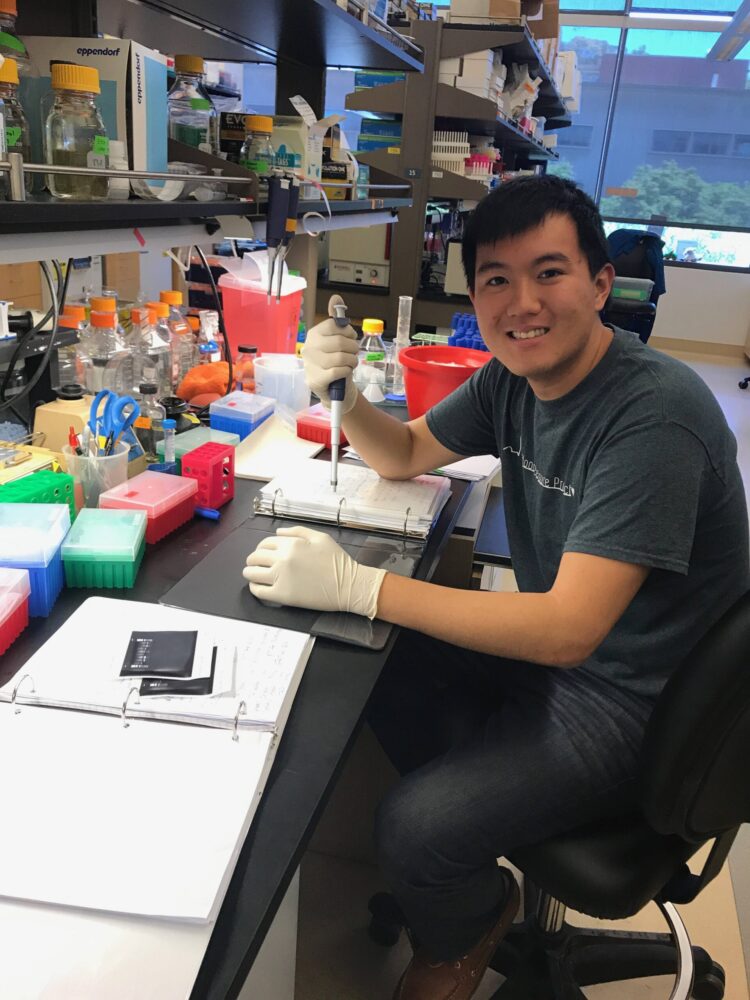
Many tandemly repeated histone gene clusters exist in the Drosophila Melanogaster genome and are subjected to complex regulation during the cell cycle. However, the exact mechanism of this regulation remains elusive. Using a variant of the CRISPR/Cas9 system, we have developed a DNA-pulldown technique that, when coupled to mass-spectrometry, is capable of identifying bound proteins on a given promoter, enhancer, or any other regulatory DNA sequence. Applying this technique to the D. Melanogaster histone cluster, the pulldown samples interestingly showed an enrichment of a particular protein domain – LisH. Found […]
Colleen Murphy

The ability to understand and predict how landscapes will evolve enables us to mitigate the effects of natural disasters and to act as stewards of the land by taking appropriate conservation and restoration measures when necessary. Currently, the geomorphic transport laws that we use to express this evolution do not quantitatively consider variations in rock types and the vegetative communities that they host. This project aims to further our understanding of the role that lithologic heterogeneity plays in landscape evolution by mapping and characterizing lithologic variability at two sites in […]
Edwina Tran

Dengue virus (DENV) is a mosquito-borne flavivirus that causes up to 390 million infections every year, resulting in 96 million cases of disease globally. Infection with any of the four serotypes of dengue can result in inapparent infection, dengue fever, or severe forms of the disease associated with vascular leak leading to shock. DENV non-structural protein 1 (NS1) plays a role in viral replication and immune evasion, as well as pathogenesis. More specifically, DENV NS1 has been found to trigger permeability of human endothelial cells in vitro and systemic vascular […]
Anandita Mathur

Autophagy is a fundamental pro-survival cellular process by which superfluous proteins and damaged organelles are delivered to the lysosome for degradation and reuse.. Numerous human disorders have been linked with dysfunction in autophagy including heart disease, cancer, and neurodegeneration. The molecular mechanisms of autophagy are currently not well understood. My project goal is to study how the autophagosome, the double membrane vesicle which contains cargo and fuses with the lysosome membrane, is generated. Based on previous studies, we hypothesize that the CTAGE5 protein plays a role in autophagosome biogenesis. I […]
Annika Anderson

Retinitis Pigmentosa (RP) is a set of genetically inherited neurodegenerative disorders that leads to degeneration of photoreceptor neurons and loss of vision. While onset of RP can be detected early, there are currently no treatments to prevent disease progression. Cellular reprogramming is a promising approach to replenishing photoreceptors after retinal degeneration. In zebrafish, Mller glial cells can dedifferentiate and reprogram into photoreceptor cells upon retinal damage. However, this restorative activity of Mller glial cells is limited in mammals. A CAS9 mediated genome wide activation screen offers the potential to identify […]
Cory Berger
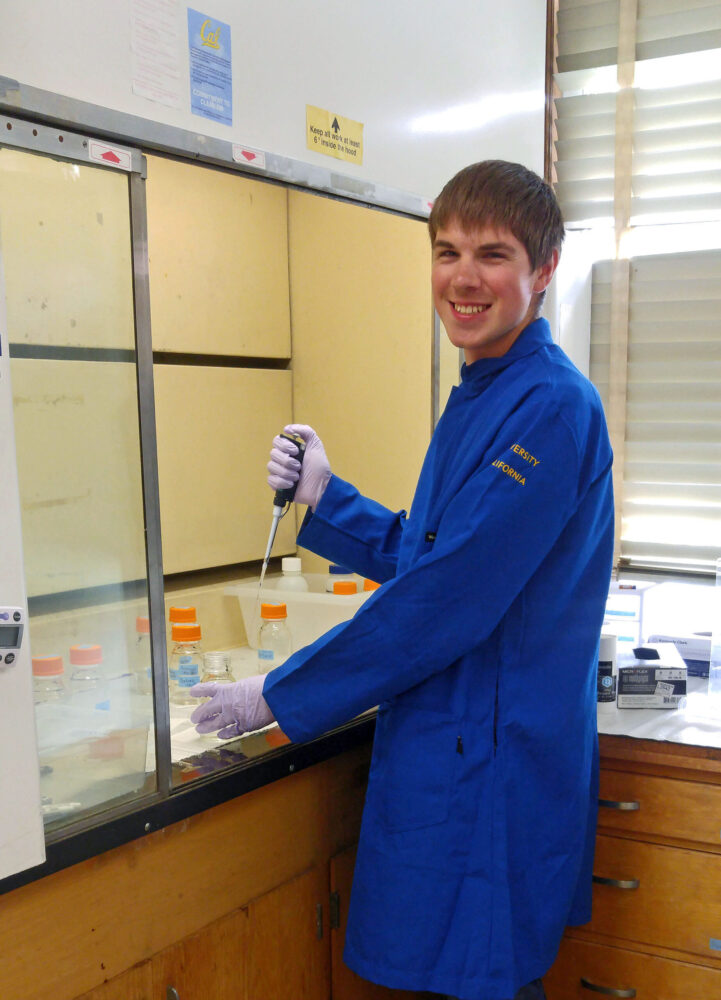
Discovering how traits evolve or are lost is key to understanding the processes underlying biodiversity. Web-building is an ancestral trait in orb-weaving spiders, but several taxa have secondarily lost the ability to build webs. Among the long-jawed spiders of the genus Tetragnatha, there are species that exhibit a range of web-building phenotypes, including the total loss of web-building and the construction of reduced webs. My research will use Scanning Electron Microscopy (SEM) to investigate the silk organs of these species, which will provide a clear picture of the morphologies associated […]
Emily Duan

The activation of the adaptive immune system in host-tumor interaction mediates the efficiency and strength of the host anti-tumor response. Necroptosis, a form of programmed cell death, has the ability to moderate the development of antitumor tolerance versus immunity due to its pro-inflammatory properties. However, in what ways and to what extent do the products of necroptosis trigger the activation of the immune system is not well understood. I am interested in using a necroptotic tumor vaccine overexpressing RIP3, a cell death protein, to study the effect of necroptosis on […]
Iris Li

The Target of Rapamycin (TOR) is a protein kinase involved in many aspects of cell physiology. Because of its importance in regulating growth, TOR has been central to metabolic and cancer research for years. Saccharomyces cerevisiae contains two paralogs of TOR, Tor1 and Tor2, which exist in their respective multi-subunit complexes TORC1 and TORC2. TORC2 has been found to regulate cell polarity, endocytosis, and actin polymerization in response to external stimuli, and studies have shown that the localization of TORC2 to the plasma membrane is essential for the complex’s function. […]